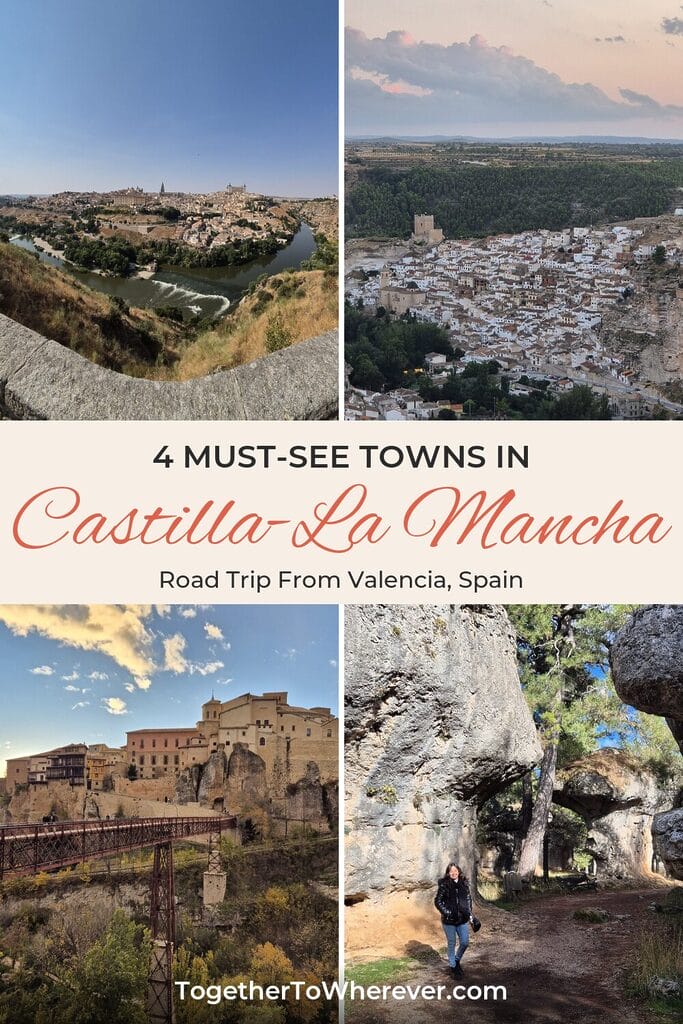
When we first moved to Valencia, Castilla-La Mancha wasn’t even on our radar. I mean, when most people think of La Mancha, they think of flat fields, windmills and Don Quixote, and that’s about it. We did too, honestly.
Then we started taking weekend trips inland from Valencia, and this region kept surprising us. A Bronze Age well out in the middle of the farmland. A village carved into the walls of a canyon. Houses hanging off the edge of a cliff. A forest of giant rocks that used to be the bottom of the sea.
Truth be told, we keep coming back. These are the four towns in Castilla-La Mancha we’d send anyone to, along with where we ate, where we stayed, and the things we wish we’d known before we went.
Here are the four towns in this guide: Toledo, Daimiel (for the Motilla del Azuer), Alcalá del Júcar and Cuenca (plus the Ciudad Encantada just outside of town).
Want a quick look first? Here’s our short video of all four:
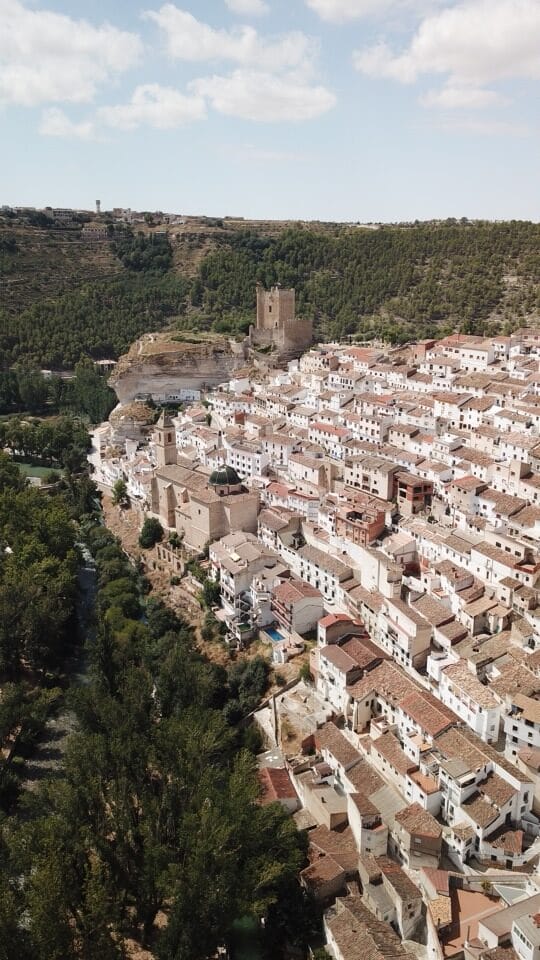
1. Toledo
If you’ve seen one photo of Castilla-La Mancha, it was probably of Toledo. And for good reason.
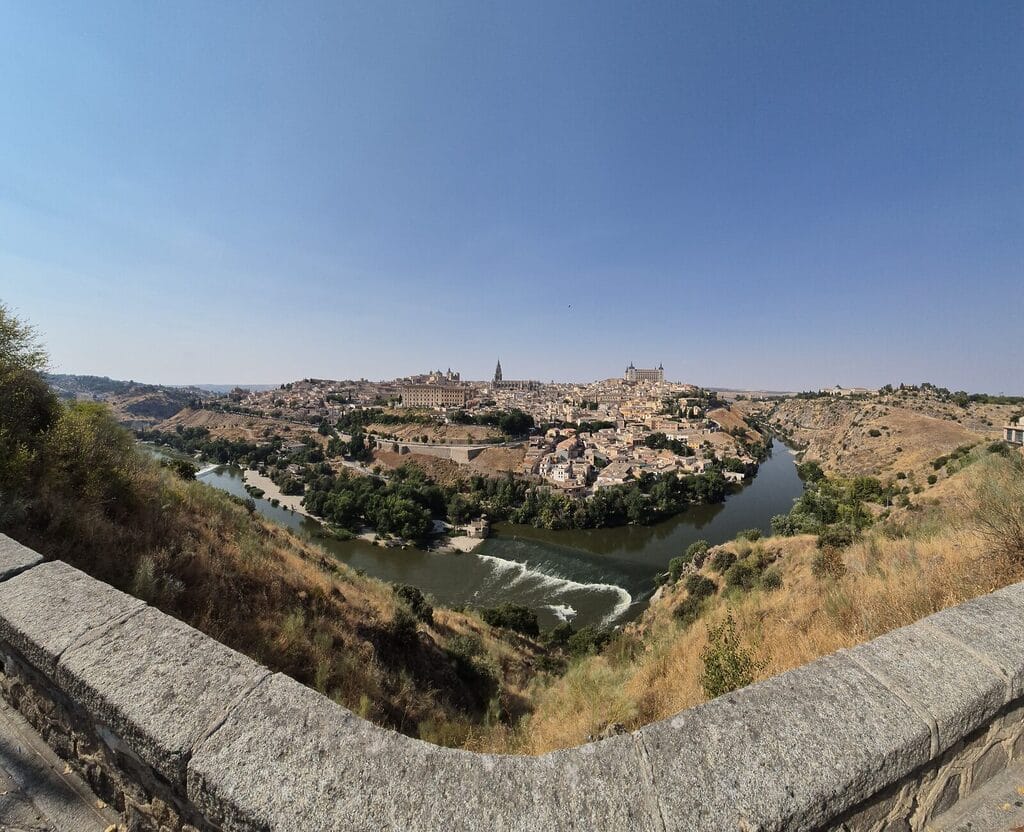
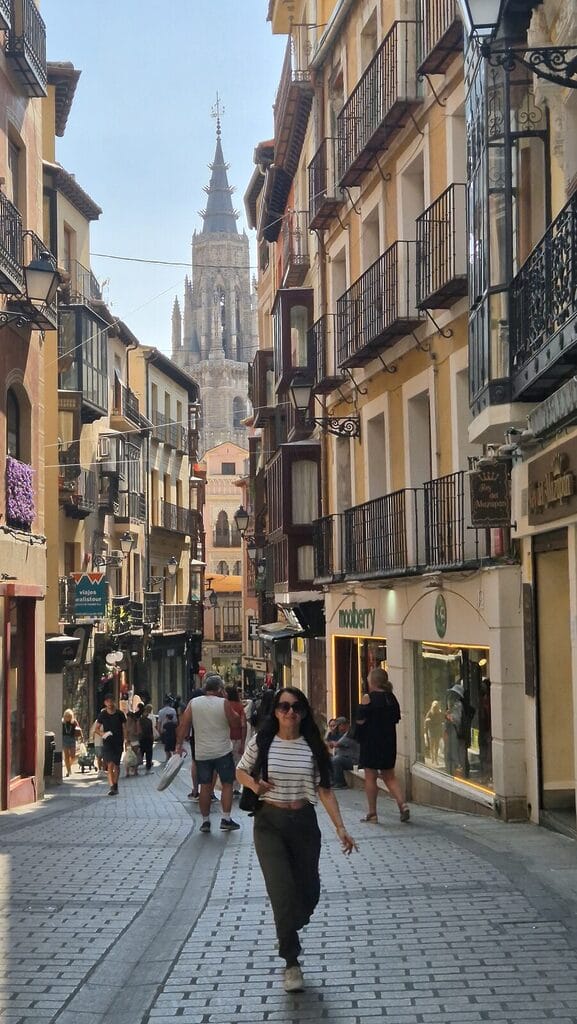
Toledo was the capital of the Visigothic kingdom back in the 500s, and for centuries Christians, Muslims and Jews all lived here side by side. That’s why it’s called the “City of Three Cultures,” and it’s also why you can find churches, synagogues and a mosque just a few streets apart from each other. Walking around the old town, you really feel all those layers of history stacked on top of one another.
The Tagus River wraps around the city on three sides, so the old town sits up on its hill almost like an island. Our favorite way to see it is from the outside looking in.
Pro-Traveler Tip: Cross over the river to the Mirador del Valle at sunset. It’s free, and it’s the view of Toledo you’ve seen on every postcard.
Toledo is also an easy day trip from Madrid (less than an hour by train), so if you’re flying in or out of Madrid, it’s worth working it into your plans. The Toledo tourism office has the latest opening hours for the monuments.
My favorite part of our visit was that viewpoint outside of town, on the other side of the river. From there you get the whole city in one view, with the river wrapped around it.
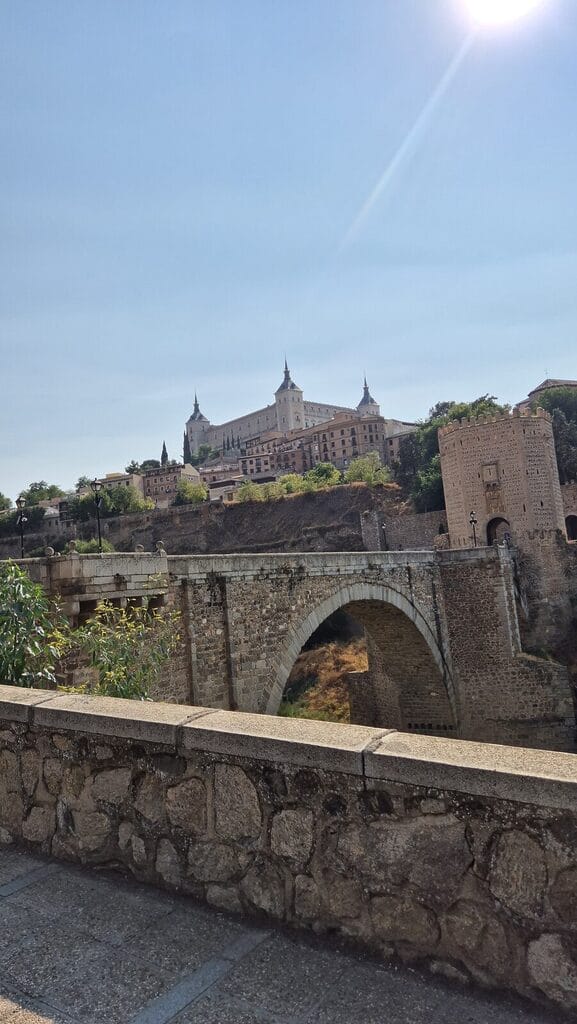
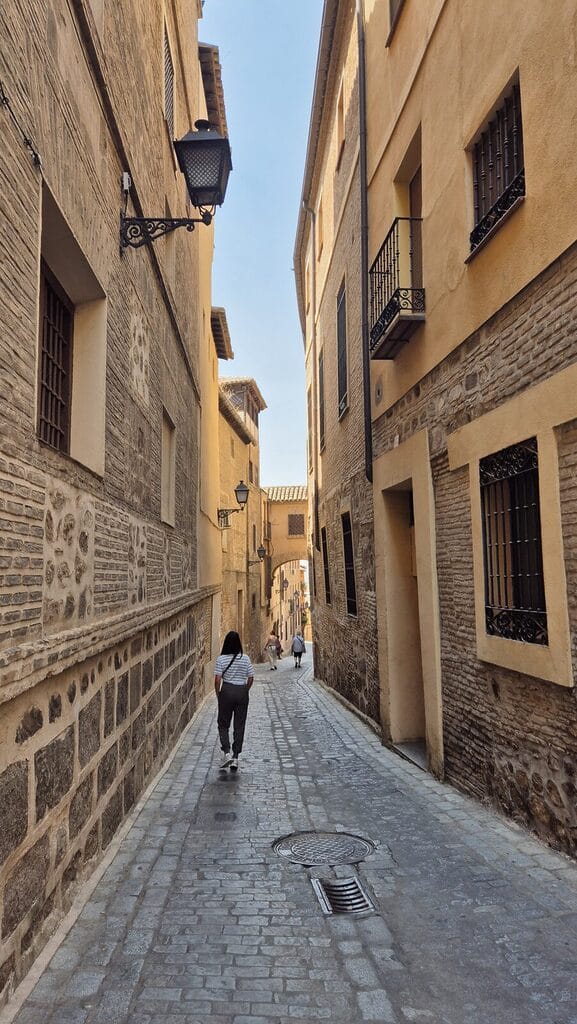
Walking around the old town, you’ll notice swords and shields everywhere. Toledo has been famous for its steel for centuries, and the shop windows are full of them. It was really impressive to see, and Petra really wanted one (ha!).
And don’t leave without trying the marzipan. Toledo is known for it, and I loved it.
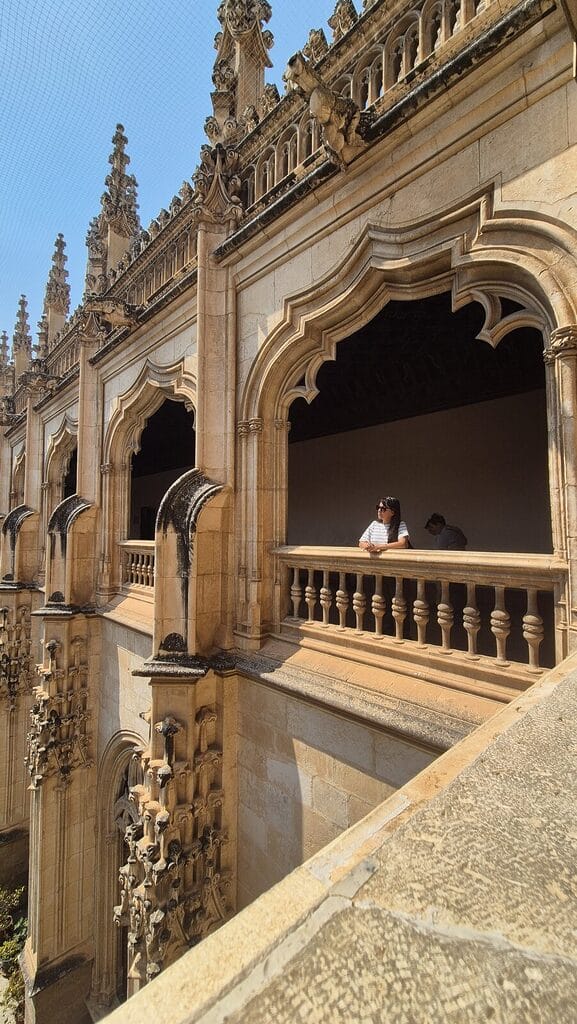
We also visited the Monasterio de San Juan de los Reyes. I really enjoyed walking around it. Architecture-wise, it was so beautiful, it wasn’t too crowded, and it was a nice way to get out of the heat. It was built by the Catholic Monarchs, Ferdinand and Isabella, in the late 1400s, and was meant to be their burial place (they ended up being buried in Granada instead). The Gothic cloister is the highlight, with two levels of stone arches around a garden, and you can walk around the upper gallery too. Look out for the iron chains hanging on the outside walls. They belonged to Christian prisoners freed in Granada.
If you’re staying in Madrid and want someone else to handle the driving and the history, these guided Toledo tours include the cathedral, the synagogue and the El Greco church:
2. Daimiel & The Motilla del Azuer
Would you have known this existed? Because we definitely didn’t.
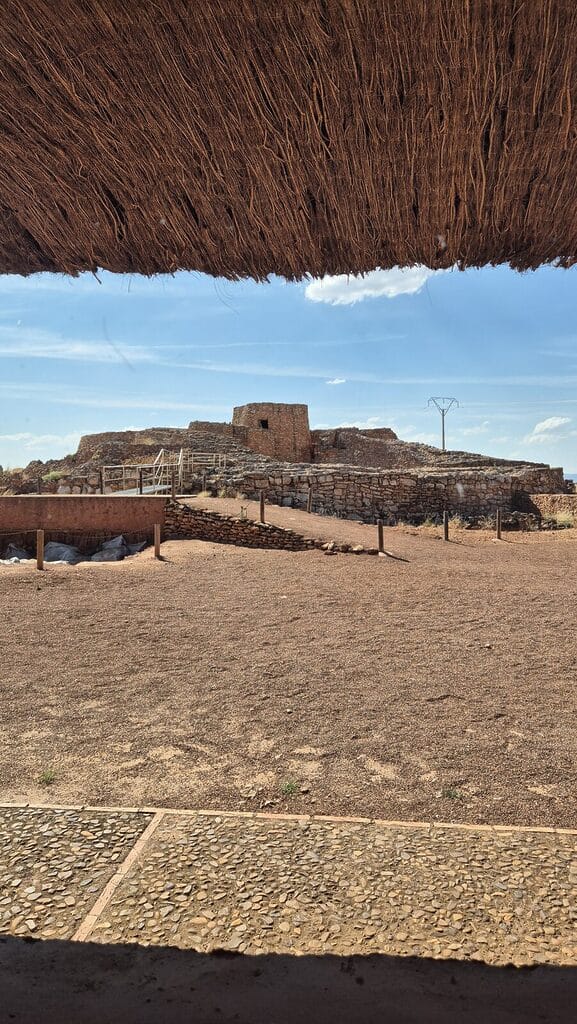
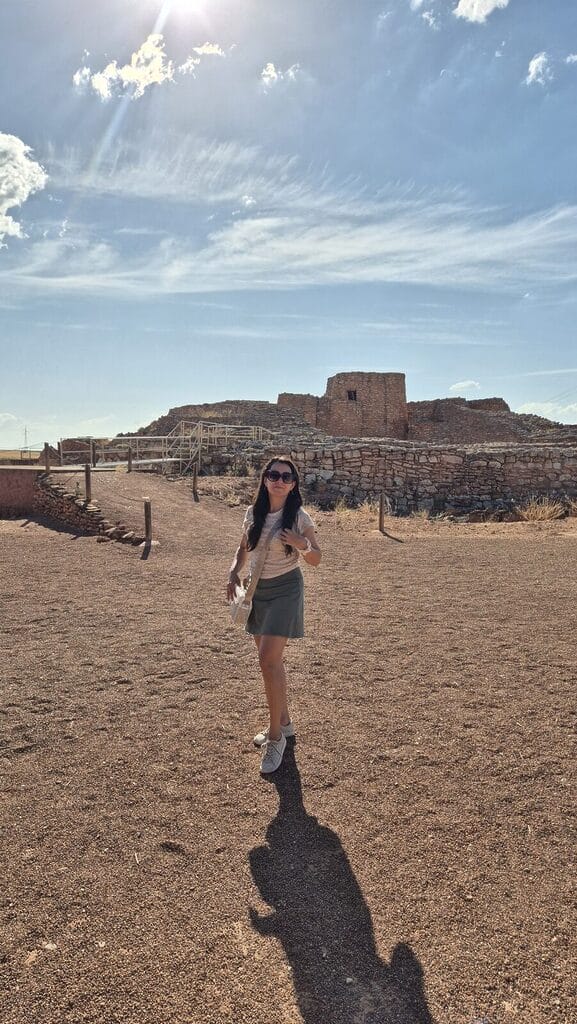
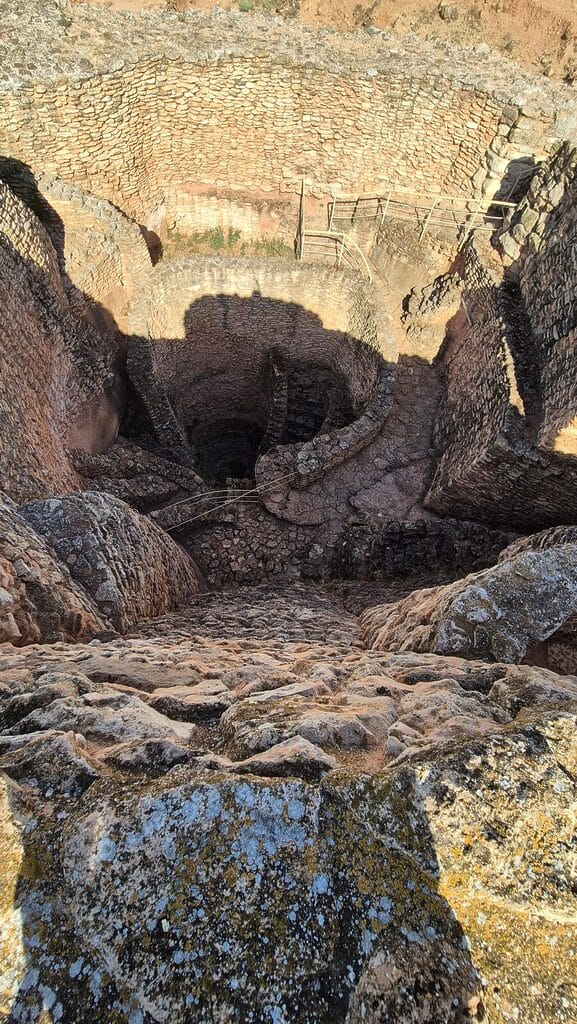
Around the same time people in England were rearranging the stones at Stonehenge, people here in La Mancha were digging down into the earth for water. A massive drought was hitting this whole part of the world, and whoever controlled the water survived. So they built the Motilla del Azuer, a Bronze Age fortress over 4,000 years old, right out in the middle of the fields near Daimiel.
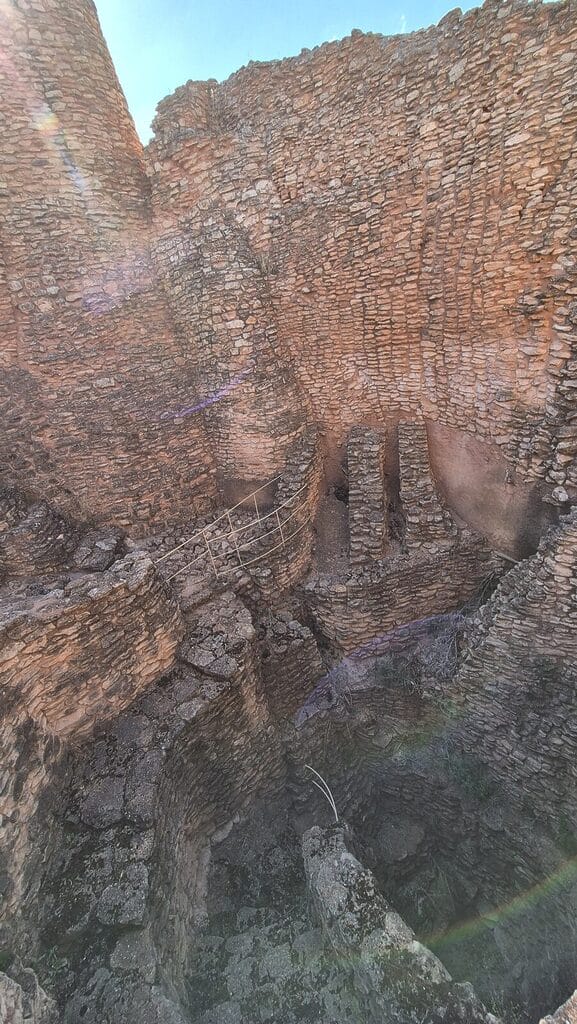
In the center of it is what’s thought to be the oldest well ever found on the Iberian Peninsula. As the water table dropped, they just kept digging deeper, and today it goes down at least 16 meters. Then they wrapped the whole thing in walls, three rings around a tower about 10 meters tall, with grain silos inside and ovens for toasting cereal and firing pottery.
It was basically a Bronze Age survival machine.
There are around 32 of these motillas scattered across the plains, but this is the only one you can actually visit. Standing in the middle of it, we couldn’t get over how impressive it was for its time. It’s like a little castle, the kind you’d normally find up on a hill, except this one starts deep below the ground, built around the one thing they needed to survive.
How To Visit The Motilla del Azuer
- Guided visits only. You can’t just show up, so book ahead online at motilladelazuer.es.
- The tour starts at the Museo Comarcal in Daimiel and takes about 2 hours in total.
- Visiting in summer? Book a morning slot. There’s no shade out in those fields and it gets seriously hot, so bring a hat and sunscreen.
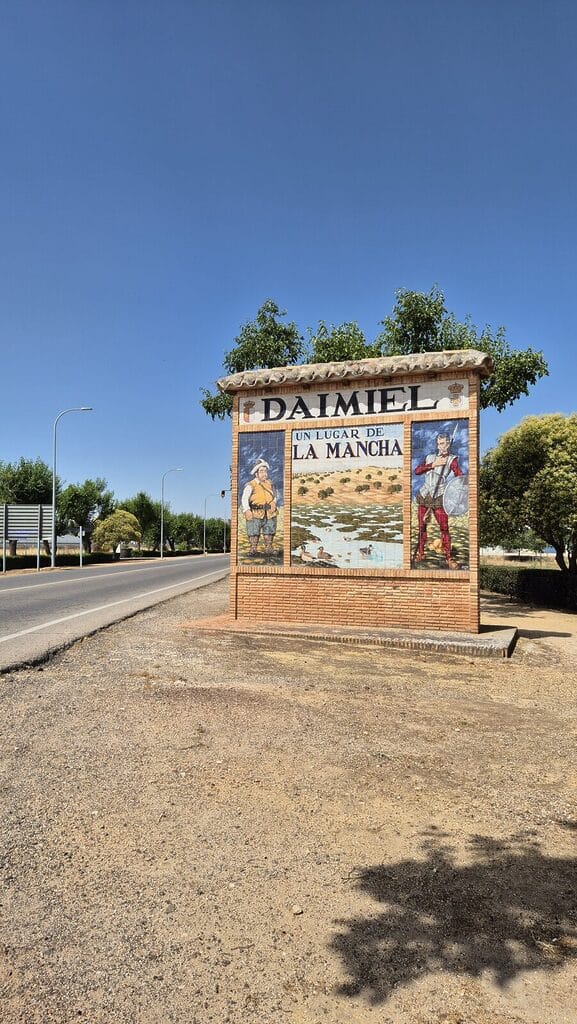
Daimiel itself is a small, charming town that grew up around a castle built to guard the Guadiana River (and even where its name comes from is still being debated!). We stayed at Hotel Doña Manuela, and for dinner we went to Taberna Gastronómica Enosentidos, which we’d happily go back to.
3. Alcalá del Júcar
This is one of the most beautiful towns in Spain, and I really can’t get over it.
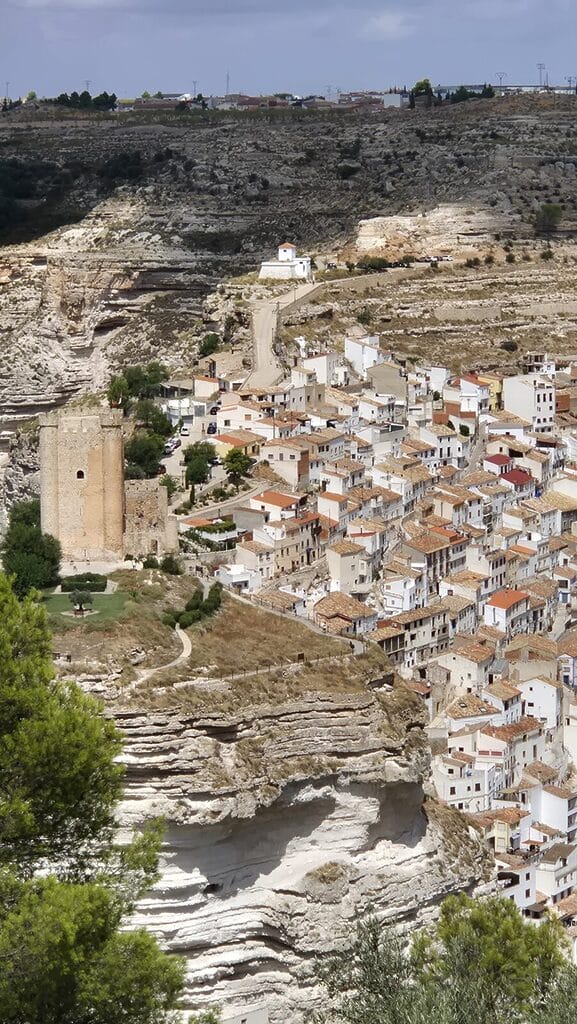
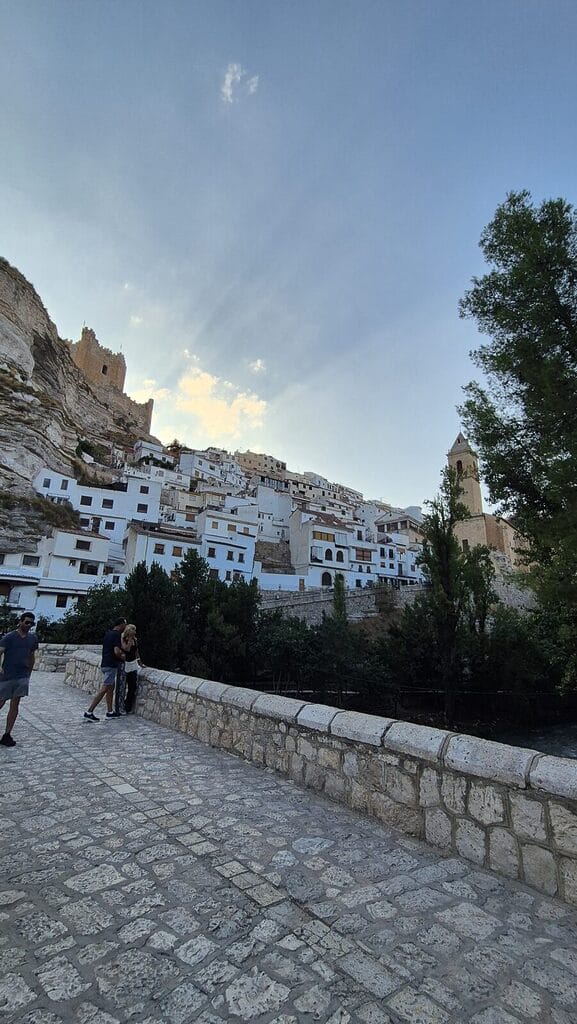
What if I told you there’s a whole village you can’t even see from the road? We were driving through flat countryside, nothing but fields, and then the road just drops. We zigzagged down the side of a canyon and suddenly, there it was. Houses stacked up on the rocks, some carved right into them, and a castle sitting on top.
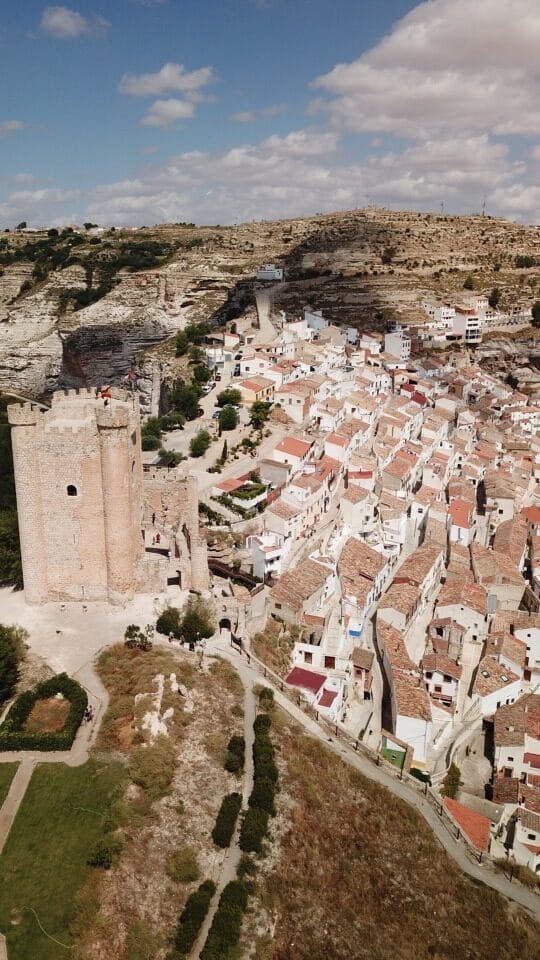
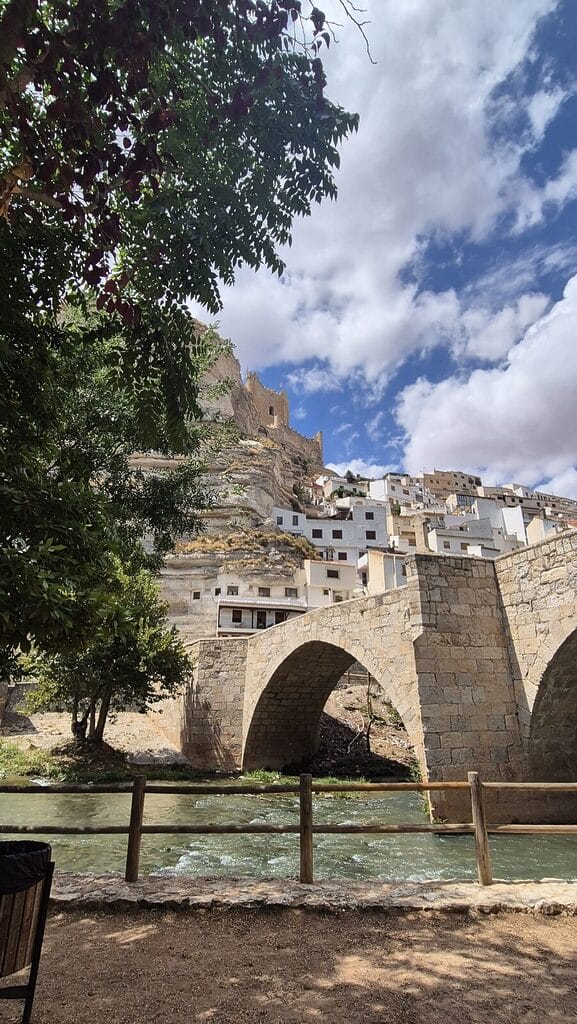
The Júcar River wraps around the village in a tight bend, and that’s exactly why people settled here: a rocky spur with water on almost every side and farmland below. The Almohads built the castle in the 12th century, and the name Alcalá actually comes from the Arabic word for castle.
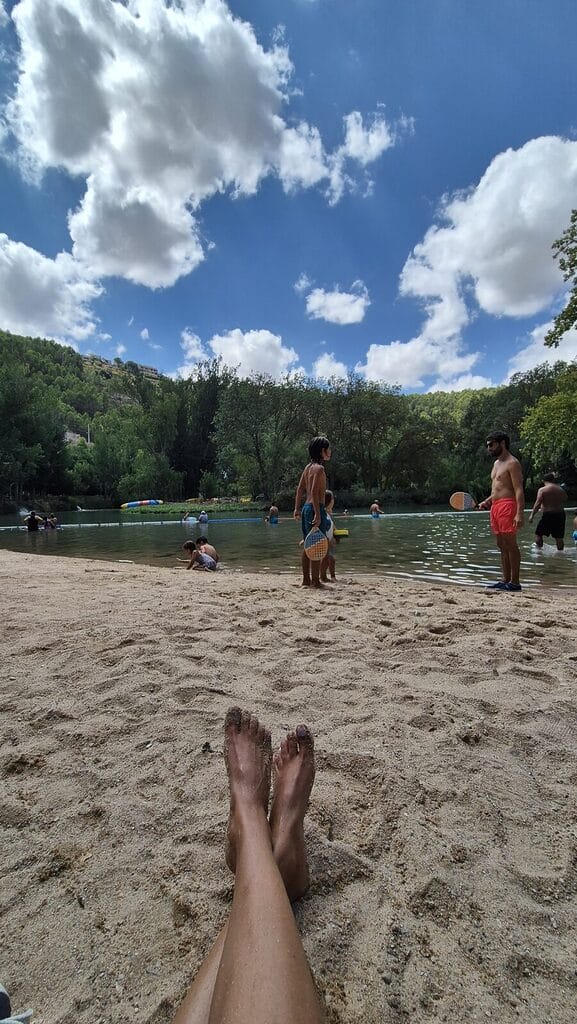
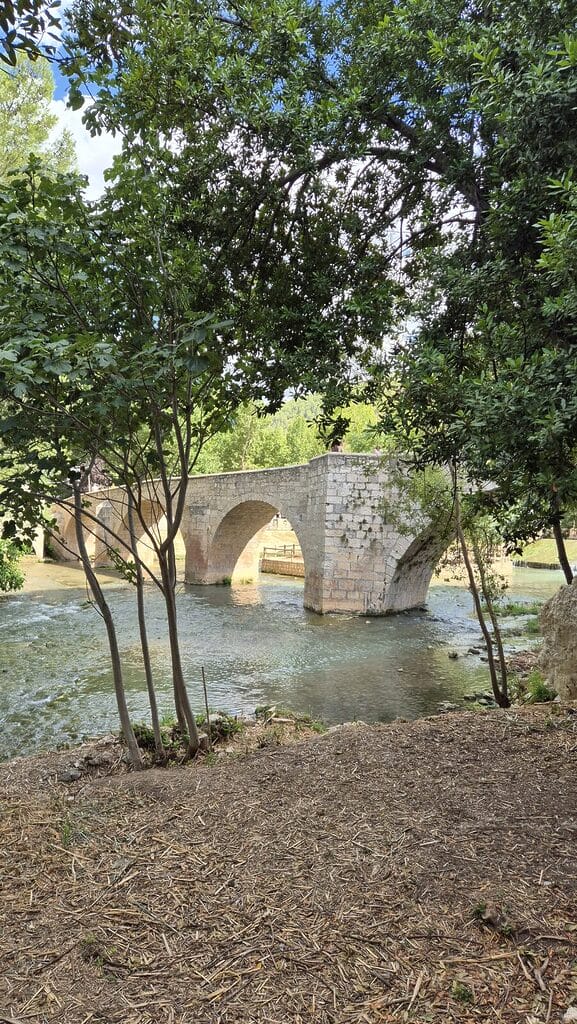
Down by the river there’s an old Roman bridge that was once a customs point, where anyone traveling between Castile and the coast had to pay up. Right beside it is a little river beach the locals call La Playeta. A beach in the middle of La Mancha. Who knew?
The Caves Of Alcalá del Júcar
Then there are the caves. We went down into every single one (ha!).
One tunnel goes straight through the mountain from one side of the canyon to the other. At the Cuevas de la Vega, you walk through tunnels dug right through the rock and come out on a balcony hanging over the gorge. Another one you enter at the top of town and come out at the bottom, down more than 100 steps, so wear comfortable shoes.
The caves stay around 18 degrees all year. We came in the middle of summer, when Valencia was sweltering, and it was so much cooler here. If you’re looking for an escape from the heat, this is it.
Where We Stayed & Ate In Alcalá del Júcar
You don’t just visit the caves here, you can actually sleep in one! We stayed at Casa del Juez, Alojamiento Rural Singular, in one of their cave rooms, and yes, even the bathroom is carved right into the rock. It has a bathtub and everything. I mean, how often do you get to take a bath inside a cave?
The cave room was so comfortable, and the host was super friendly and nice. Breakfast was really amazing, and we ate it out on the balcony terrace with views over the village. It’s in the perfect location, right in town, so you can walk everywhere. We highly recommend it.
For dinner, we crossed to the other side of the canyon to El Mirador restaurant. Watching the sunset from that terrace, with all those white houses tumbling down the rock, it honestly looked like a mini Santorini.
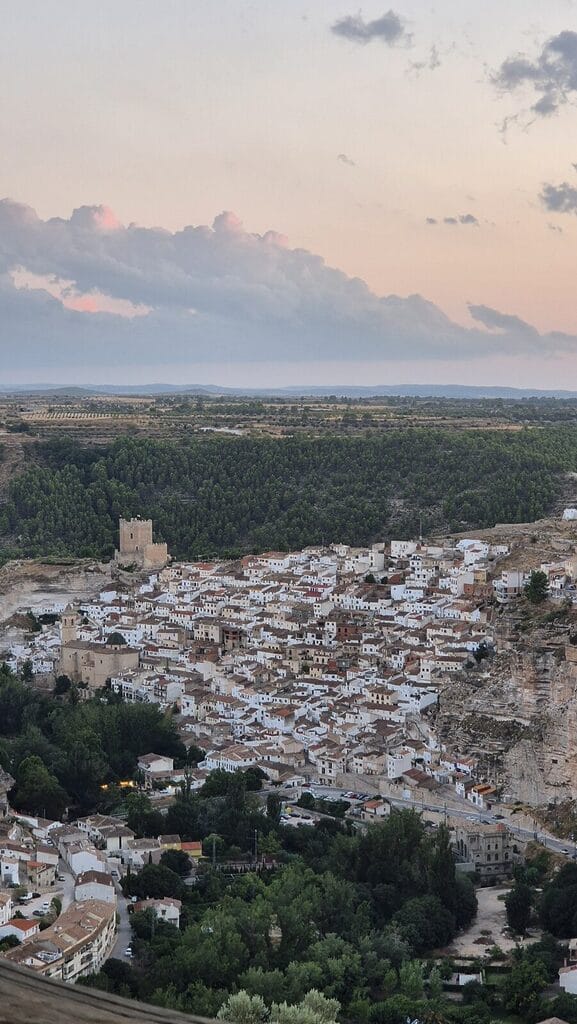
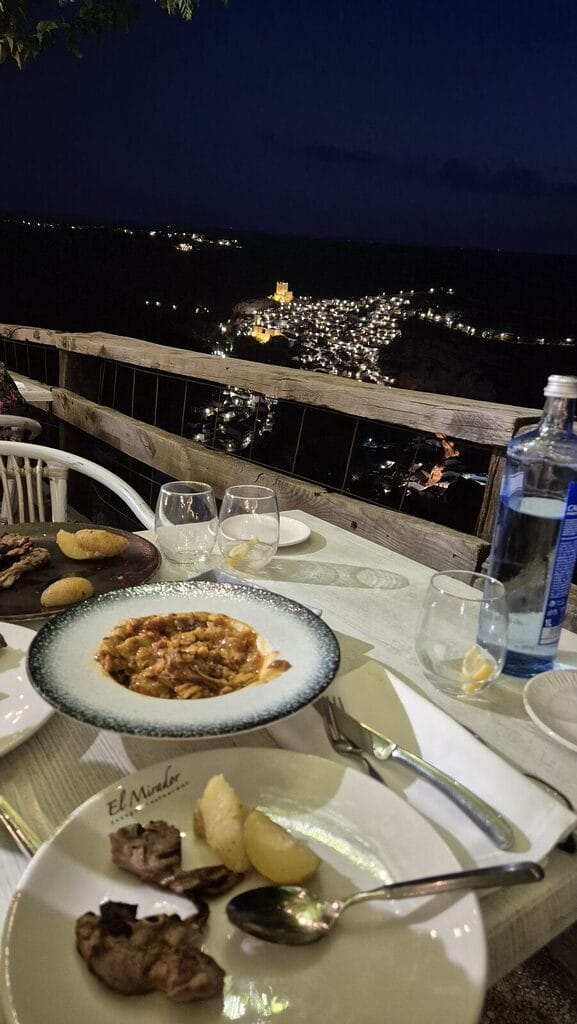
Pro-Traveler Tip: Alcalá del Júcar is about two hours from Valencia, so you could do it as a day trip. But if we had to do it again, we’d tell you the same thing we’d tell a friend: it’s so worth two nights. Get the sunset dinner and the cave room. You won’t regret it.
4. Cuenca & The Ciudad Encantada
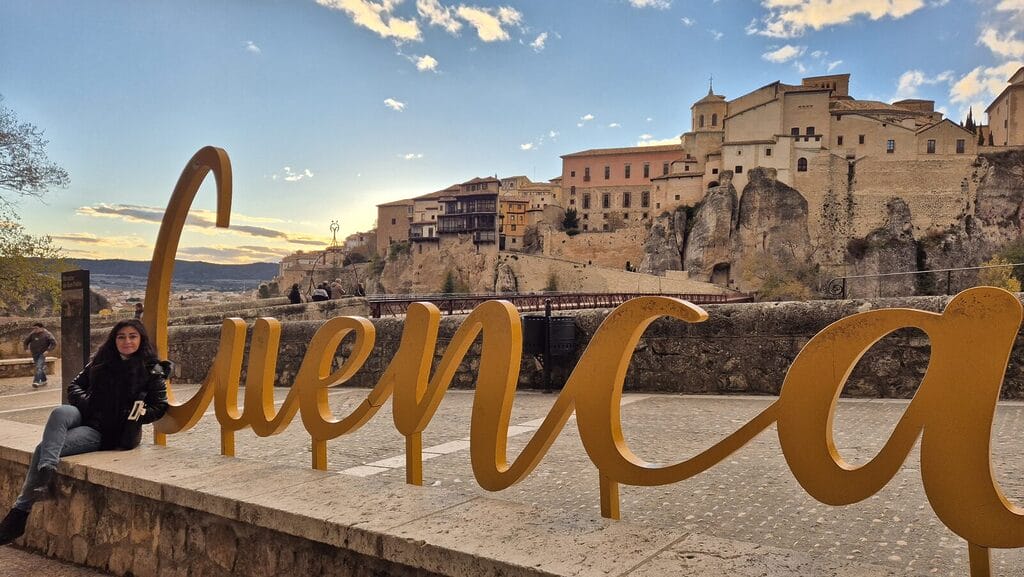
What if I told you Spain had skyscrapers in the Middle Ages?
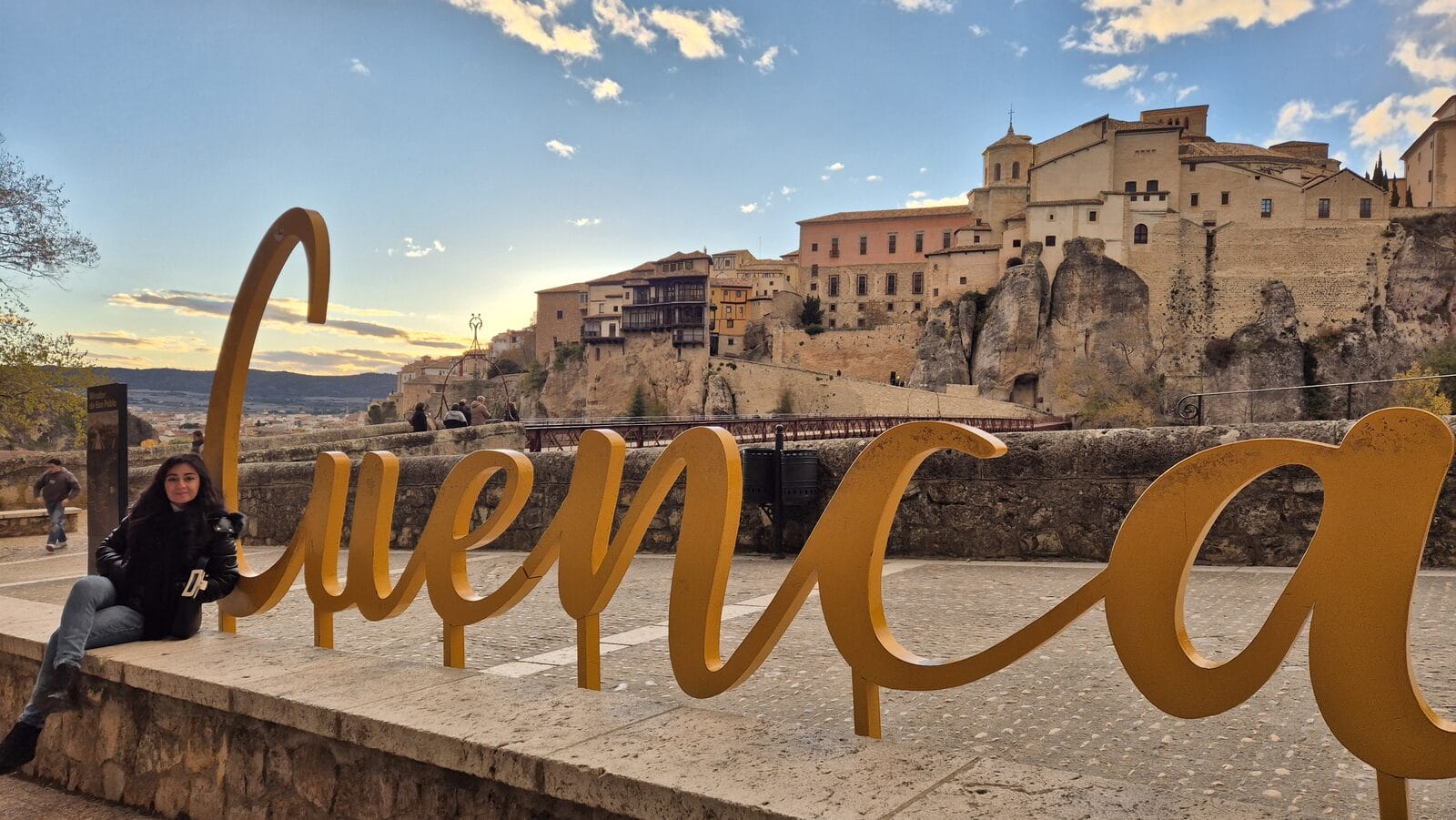
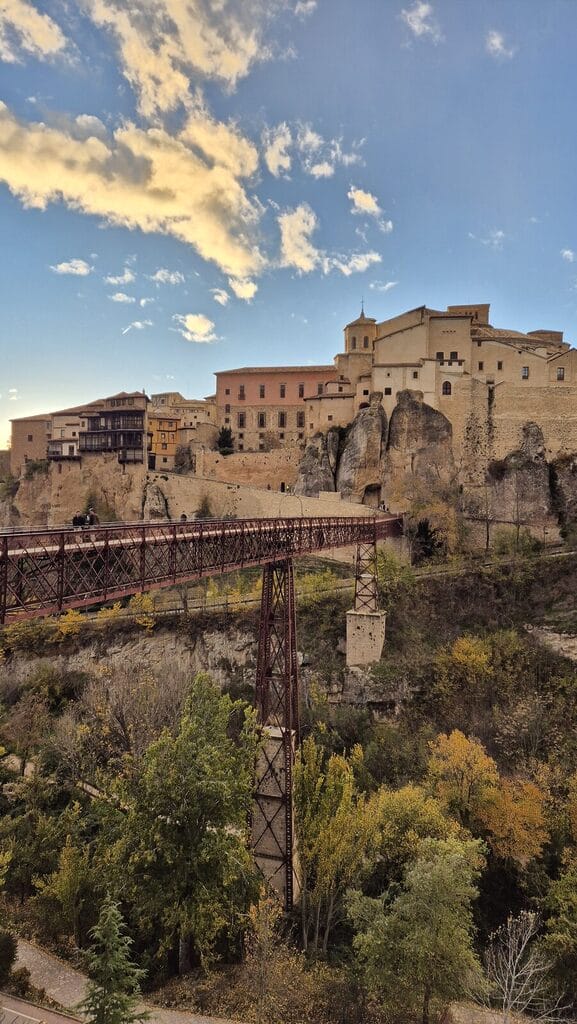
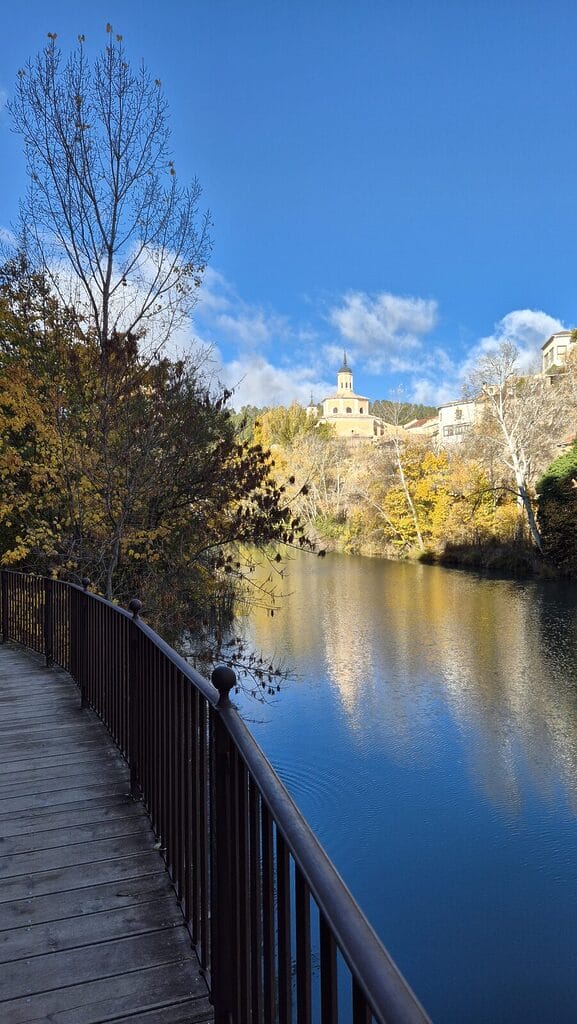
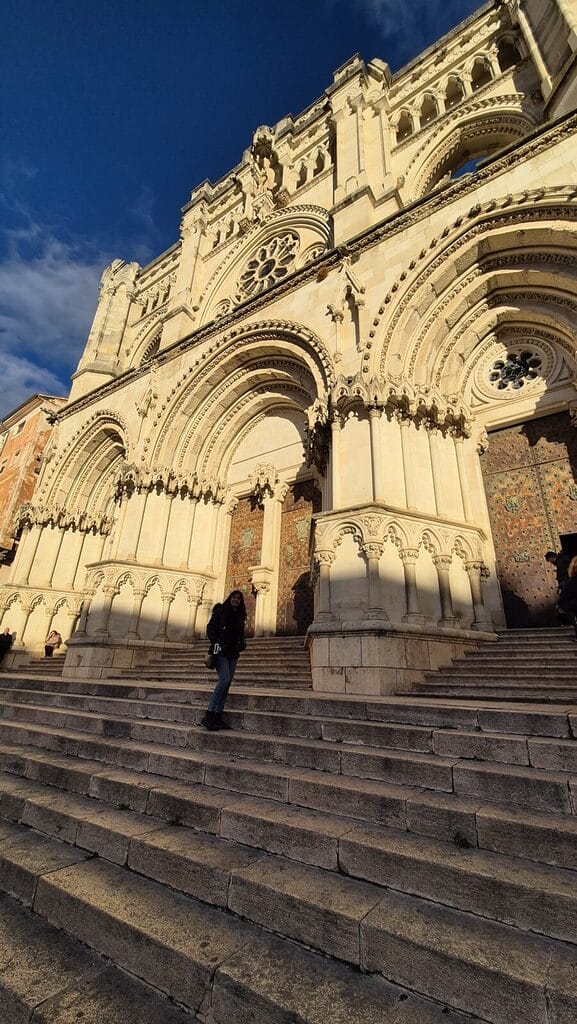
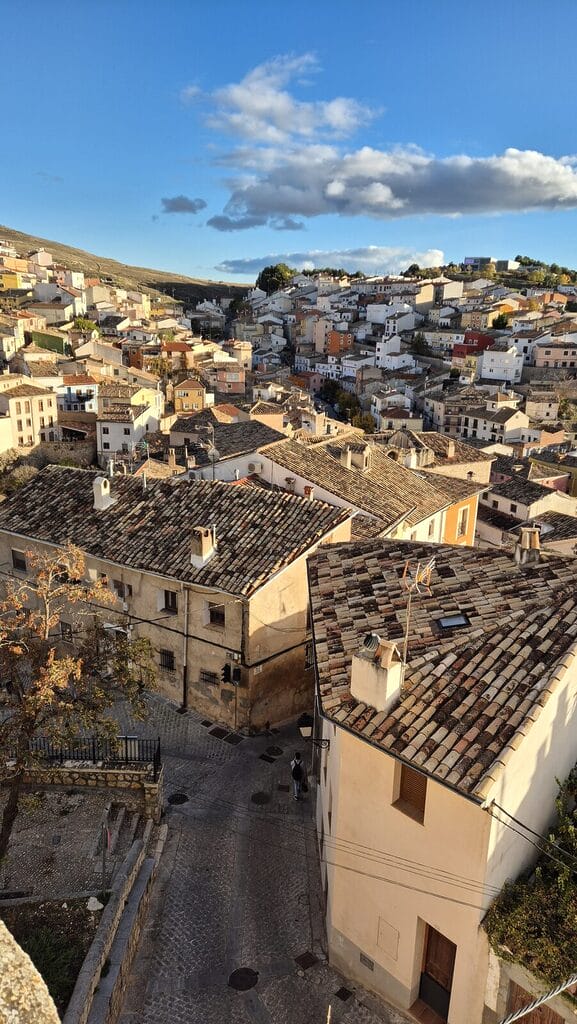
In Cuenca, some of the buildings go up to 10 stories, built straight into the cliff. The most famous are the hanging houses (Casas Colgadas), sticking right out over the gorge, and there’s proof they were already standing in the 1400s. One of them is an abstract art museum now, which we definitely did not see coming.
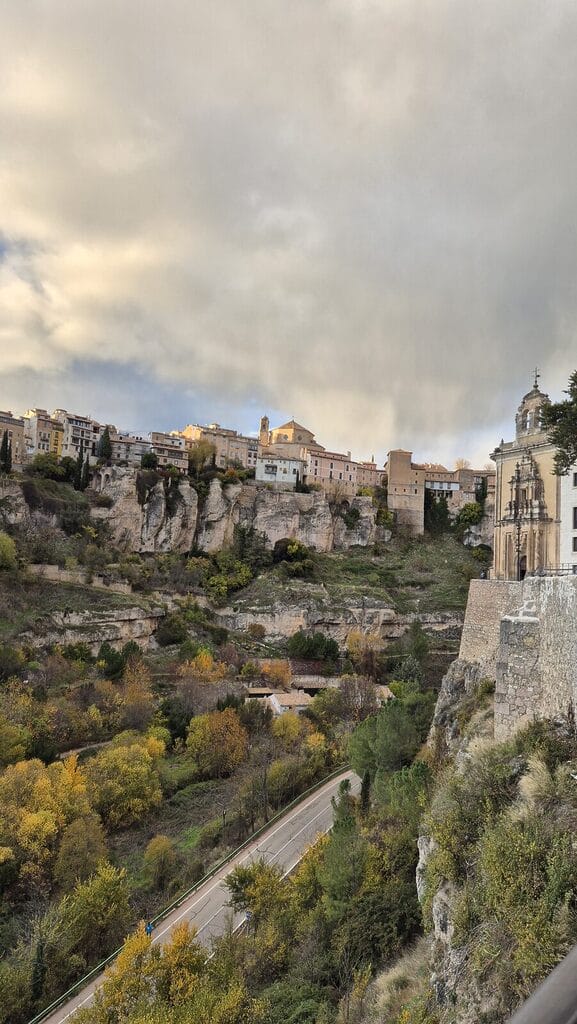
Pro-Traveler Tip: For the best view of the hanging houses, walk across the San Pablo Bridge. It’s iron and wood, and yes, it moves a little. Don’t look down if you’re not a fan of heights!
Don’t Skip The Ciudad Encantada
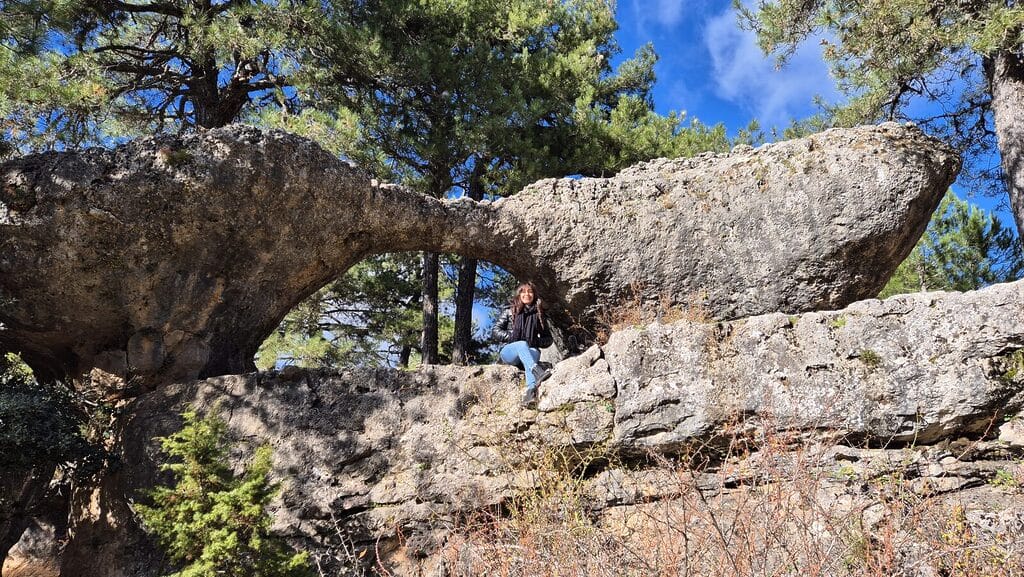
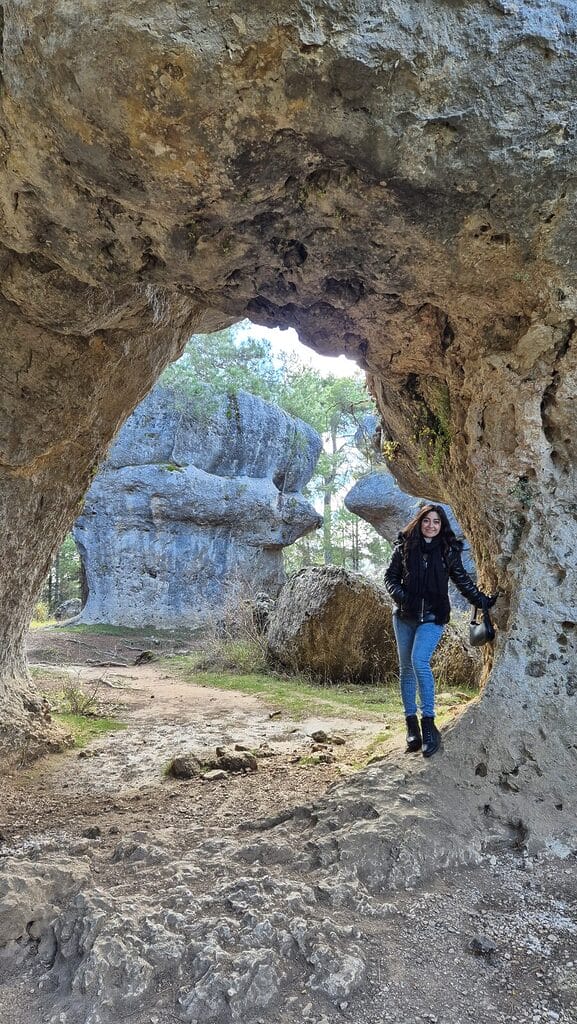
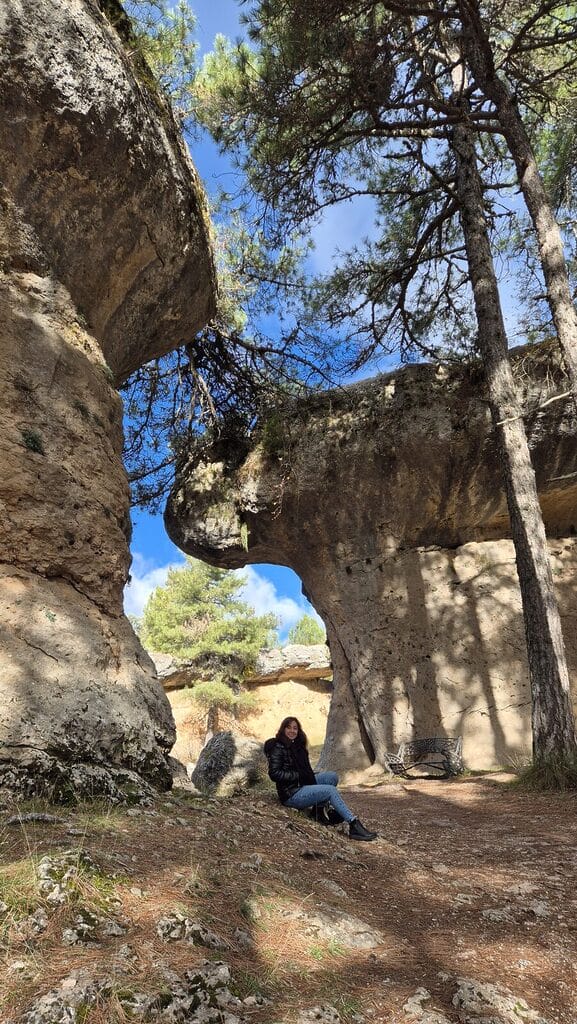
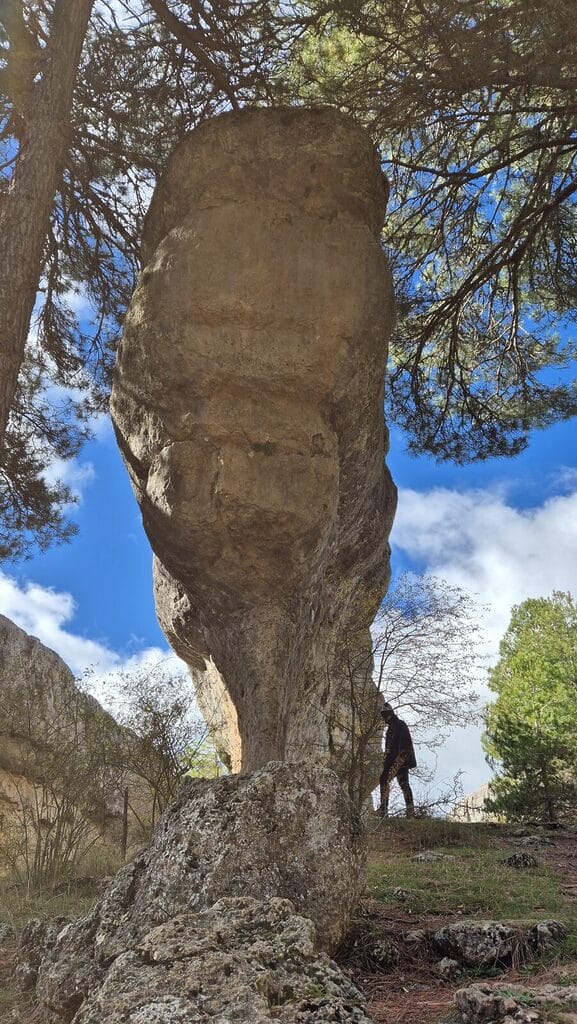
Here’s the thing. Most people visit Cuenca and only see the hanging houses, and they have no idea they’re about half an hour away from one of the most surreal places in Spain.
Ninety million years ago, all of this was the bottom of the sea. Water and wind have been carving these rocks ever since, and walking through the Ciudad Encantada (the “Enchanted City”) literally feels like walking through a fantasy movie set. Some of the rocks look like giant mushrooms, there’s one called the Seal, and they even filmed part of Conan the Barbarian here.
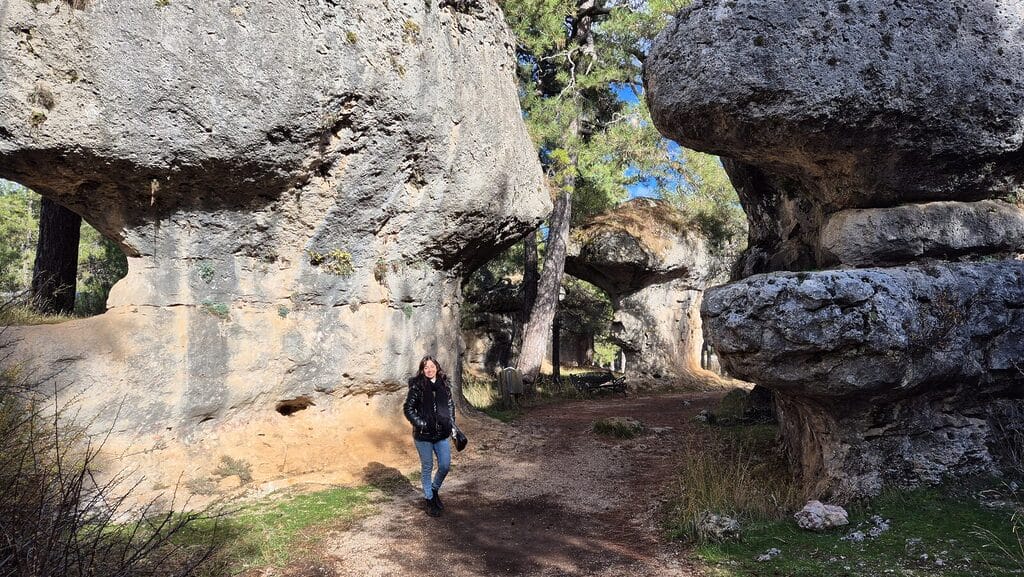
If you go to Cuenca and skip this, you’re missing half of what makes the area so special.
No car? You can still get there. There are small guided trips to the Ciudad Encantada from Cuenca, a night walking tour of the old town, and full-day tours from Madrid:
Where We Ate Near The Ciudad Encantada
Right next to the Ciudad Encantada is Valdecabras, a tiny village with only a handful of people living in it, and that’s where we had lunch at Rincón de Valdecabras. It’s a proper village restaurant: homemade food, meat on the grill and a house dessert named after the village. The food was so good and so authentic.
You’ll want a reservation, though, because it fills up once everyone’s done with the rocks.
Pro-Traveler Tip: Cuenca is about two and a quarter hours’ drive from Valencia, so you can totally do it as a day trip. We stayed the night, and I’m so glad we did, because it gave us the whole next morning for the Ciudad Encantada followed by lunch in Valdecabras.
We stayed at the Green River Hostel, and it was very comfortable and very peaceful, with spacious rooms and a very nice view.
How To Plan A Castilla-La Mancha Road Trip From Valencia
We did these as separate weekend trips from Valencia, which is honestly how we’d recommend doing them if you live in Spain or have the time. Each one deserves at least a night.
If you’d rather see them all in one go, a car is a must. Here’s roughly how we’d string them together as a loop from Valencia:
- Valencia to Alcalá del Júcar (about 2 hours). Spend two nights, and sleep in a cave.
- Alcalá del Júcar to Daimiel (about 2.5 hours). Book a morning tour of the Motilla del Azuer.
- Daimiel to Toledo (about 1.5 hours). Stay for the sunset at the Mirador del Valle.
- Toledo to Cuenca (about 2 hours). Stay the night so you have the next morning for the Ciudad Encantada.
- Cuenca back to Valencia (about 2.25 hours).
That’s a comfortable week without rushing. Keep in mind that summer out here gets very hot, so plan your outdoor stops (the Motilla, the Ciudad Encantada) for the mornings and save the caves for the afternoon.
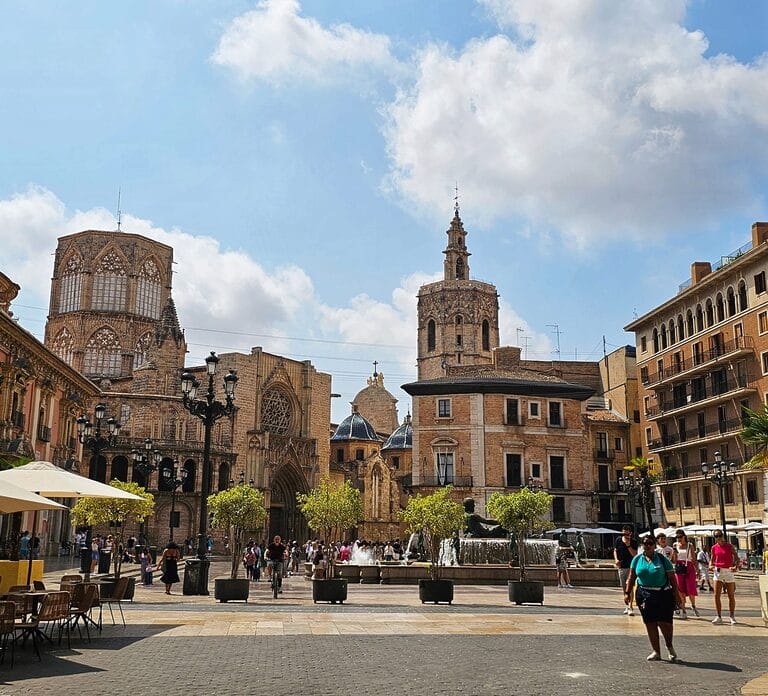
If you’re basing yourself in Valencia for part of your trip, have a look at our 3 days in Valencia itinerary and our list of reasons Valencia is worth visiting.
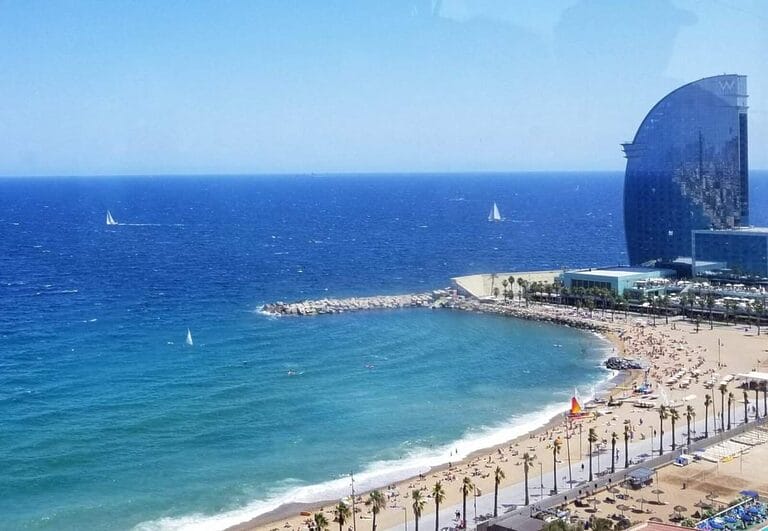
And if you’re putting together a bigger trip around Spain, have a look at our 3-day Seville itinerary, our Barcelona itinerary for first-timers and our Barcelona vs Valencia comparison.
Castilla-La Mancha Road Trip FAQs
How many days do you need for a Castilla-La Mancha road trip?
About a week lets you see all four towns without rushing. If you live in Spain, you can also do them as separate weekend trips, like we did. Give each town at least one night, and two in Alcalá del Júcar.
Do you need a car to visit these towns?
For Toledo and Cuenca, not really. Toledo is less than an hour by train from Madrid, and the high-speed train between Madrid and Valencia stops in Cuenca. For Alcalá del Júcar and the Motilla del Azuer near Daimiel, a car makes things much easier.
Can you visit the Motilla del Azuer without a tour?
No. Visits are guided only and need to be booked ahead at motilladelazuer.es. The tour starts at the Museo Comarcal in Daimiel and takes about two hours.
What is the best time to visit Castilla-La Mancha?
Spring and autumn are the most comfortable for walking around. Summer gets very hot inland, so if you go then, plan outdoor stops like the Motilla and the Ciudad Encantada for the morning and save the caves of Alcalá del Júcar for the afternoon.
How far is Cuenca from Valencia?
It’s about two and a quarter hours by car. You can do it as a day trip, but we recommend staying the night so you have the next morning for the Ciudad Encantada.
Which One Would You Visit First?
Castilla-La Mancha completely changed how we think about inland Spain. It’s not just windmills and flat fields (although those are lovely too). It’s canyons, caves, cliffs and some seriously old history, and most of it is just a couple of hours from the coast.
Tell us, have you been to any of these towns? Which one is going on your list first? Let us know in the comments below. And if you want to see these places in action, you can find our videos on Instagram and TikTok.
Here are our favorite travel resources that you can use to plan your trip:
- Our Travel Insurance Recommendation
- Travel Gear and Products You Might Need
- The Best Tours and Experiences